
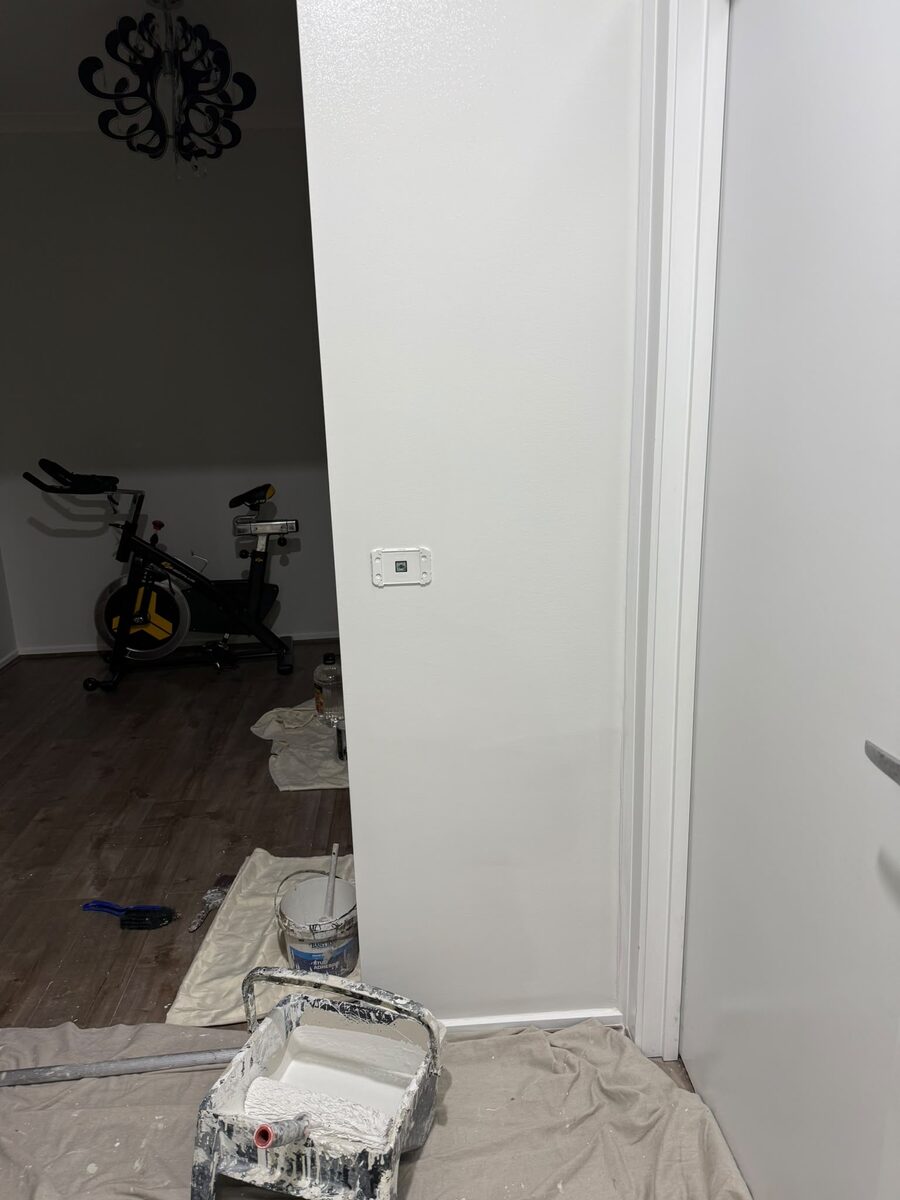
Ask any experienced painter what makes a paint job last and you will get the same answer: preparation. The top coats are the visible part, but the work under them decides whether the finish still looks good in five years or is peeling in eighteen months. Here is what proper preparation looks like, inside and out, and what you can do before your painter arrives.
Why preparation matters so much
Paint sticks to clean, sound, dry surfaces. It fails on dirt, grease, chalky old paint, moisture and loose material. Every shortcut taken before painting shows up later as peeling, bubbling, flaking or stains bleeding through. Preparation is not the boring bit before the real work. It is most of the real work.
Exterior preparation, step by step
Washing. Every exterior job starts with a wash. Dirt, cobwebs, mould and chalky residue come off with a pressure washer or a hose and brush, depending on the surface. Painting over dirt means the new paint bonds to the dirt, not the house.
Scraping. Loose and flaking paint gets scraped back to a firm edge. If paint is peeling, the new coat is only as strong as the old layer underneath it, so anything that moves comes off.
Sanding. Scraped edges get feathered so they do not show through the new finish, and glossy surfaces get sanded so the new paint can grip.
Repairs. Rotten timber, rusted nails, cracked render and failed caulking are fixed before painting. Paint hides colour, not damage.
Priming. Bare timber, bare metal, repairs and stained areas get primed or sealed. Primer is what lets the top coat stick and stops stains bleeding through.
Interior preparation, step by step
Washing walls. Kitchens especially. Grease and grime stop paint bonding, so walls get washed with sugar soap where needed.
Filling. Nail holes, cracks, dents and gaps are filled, then sanded flat once dry.
Sanding. Filled spots are sanded smooth and glossy trim is dulled so the new finish grips.
Masking and sheeting. Floors, furniture, benchtops and fittings are covered. Clean edges start with careful masking, not a steady hand alone.
Sealing stains. Water stains, smoke damage and tannin bleed from timber need a stain-blocking primer, or they will ghost through the new colour within weeks.
What you can do before we arrive
You do not need to do any of the surface prep. That is our job. But a few things make the job faster and cheaper:
- Move small and fragile items out of the rooms being painted.
- Clear benchtops and take down wall hangings and curtains where you can.
- Trim plants back from exterior walls.
- Arrange somewhere for pets to be while doors and gates are open.
- Tell us about anything that concerns you, like a leak, a crack that keeps coming back, or a patch that was repaired before.
The shortcut warning
If a quote seems much cheaper than the others, ask what preparation is included. A cheap job usually means the preparation was skipped: no wash, no scrape, no prime. It looks fine on day one and fails early. A properly prepared job costs more in labour and less in repaints.
How the weather fits in
Exterior preparation and painting need dry surfaces, so Melbourne jobs are scheduled around the forecast. A good painter would rather move a day than wash a wall that will not dry, and you should be suspicious of anyone willing to paint a damp wall to hold a date. Interior work runs all year; winter just asks for heating and airflow so coats cure properly.
What happens to the mess
Dust from sanding is contained with sheeting and extraction where practical, and the site is packed down daily: masking held over, tools stacked, rubbish out. A painting job should never leave your house worse than it found it between coats. At the end, masking comes off, floors are checked, and you walk the job with us before anyone calls it finished.
Preparation for exterior work is a bigger job again
Inside, preparation is mostly filling and sanding. Outside, it starts with a full wash to strip chalking, dirt and mould, then scraping every flake back to a firm edge, sanding the edges smooth, spot-priming bare timber and metal, and re-caulking gaps that would let water behind the new paint. On an older weatherboard, the preparation can be half the total hours on the job. That is normal, and it is exactly why two exterior quotes can sit thousands of dollars apart.
Getting ready for a quote
When we come to quote, it helps if you can show us everything you want painted, mention any known problems like damp or cracking, and tell us your timeframe. From there we can give you a clear price and a realistic schedule. Call 0426 179 466 or send an enquiry to arrange a free quote.