
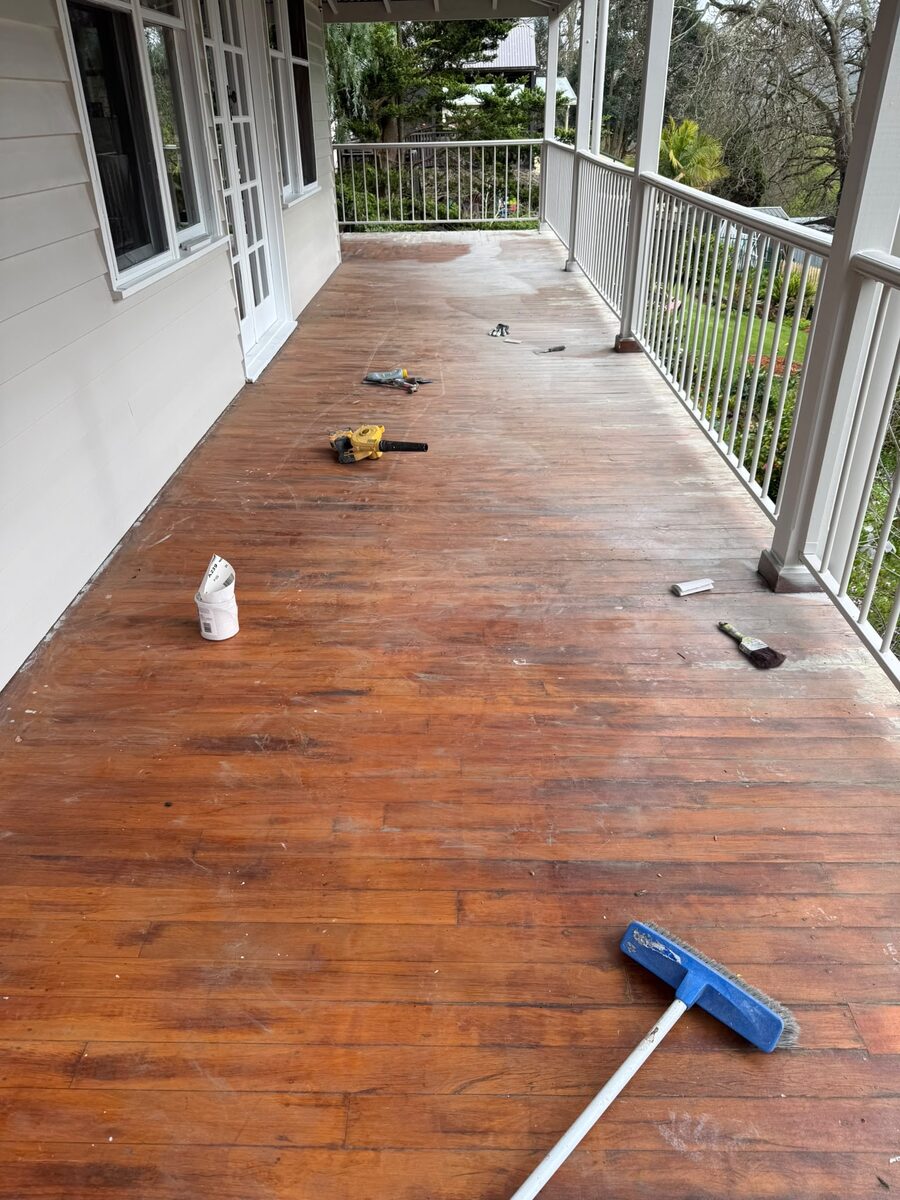
Every deck owner faces the same choice when the timber starts to grey: oil or stain. Both protect the timber, but they work differently, look different and ask different things of you over the years. Here is how to choose.
What deck oil does
Oil soaks into the timber rather than sitting on top of it. It feeds the wood, slows down moisture movement and keeps the natural grain visible. An oiled deck looks like timber, just richer.
The upside: oil is forgiving. Recoating is usually a clean and a recoat, with no stripping. Worn areas do not peel or flake, they just fade gradually, and spot recoating blends in reasonably well.
The downside: oil needs recoating more often. On a deck that cops full afternoon sun, that can mean a recoat every year or so. Shaded decks stretch longer.
What deck stain does
Stain adds pigment. It sits partly in and partly on the timber, so it changes the colour more strongly and adds more UV protection. Stains range from semi-transparent, where the grain still shows, to solid, where the finish looks close to paint.
The upside: stain lasts longer between coats and gives you colour choice. If your deck is mixed timber, patched, or just a colour you do not like, stain evens it out.
The downside: when a stain eventually fails, it can peel and flake, especially on horizontal surfaces. Recoating then means sanding or stripping back, which is a much bigger job than an oil recoat.
Melbourne weather changes the maths
Melbourne decks deal with hot summer sun, long wet winters and big temperature swings, sometimes in the same week. UV breaks down coatings on exposed decks fast, and moisture feeds mould on shaded ones. North and west-facing decks usually need the extra UV protection of a stain, or more frequent oiling. Shaded decks under trees need mould resistance either way.
How to choose
Choose oil if: you like the natural timber look, your deck is good quality hardwood worth showing off, and you are happy to recoat more often with less prep each time.
Choose stain if: you want to change or even out the colour, your deck gets harsh sun, or you want the longest gap between recoats and accept harder preparation when the time comes.
Either way: preparation decides the result. The deck needs a proper clean and, if there is old failing coating, sanding back to sound timber. Coating over grey, dirty or flaking timber wastes the product and your money.
What a recoat involves
A typical deck recoating job runs like this: inspect the timber and any old coating, wash and brighten the timber, sand where needed, then apply two coats with the right drying weather. Most decks are back under foot traffic in a day or two and furniture within a few days, depending on the product and the weather.
How often should you recoat?
As a working guide for Melbourne conditions: an oiled deck in full sun usually wants a recoat every 12 to 18 months, a stained deck every 2 to 4 years, and a shaded deck somewhere in between for either system. The water test tells you when: sprinkle water on the boards and watch it. If it beads, the coating is still working. If it soaks straight in and darkens the timber, the deck is thirsty and ready.
What does deck staining or oiling cost?
Every deck prices on its size, condition and access, so quotes come from looking at the job. The big cost drivers are whether old coating needs stripping, how much sanding the boards need, and whether any boards or fixings need replacing first. A simple clean and recoat of a sound deck is a modest job. A deck that has been left for years with peeling solid stain is a restoration, and it prices like one.
Timber type matters
Hardwood decks like merbau and spotted gum take oil beautifully and show grain that justifies the natural look. Treated pine is softer, often patchier in colour, and usually looks better under a stain that evens it out. If you are not sure what timber you have, that is part of the inspection.
If your deck is looking tired, send us a few photos with your enquiry and we can tell you what it needs. Call 0426 179 466 or use the quote form.