
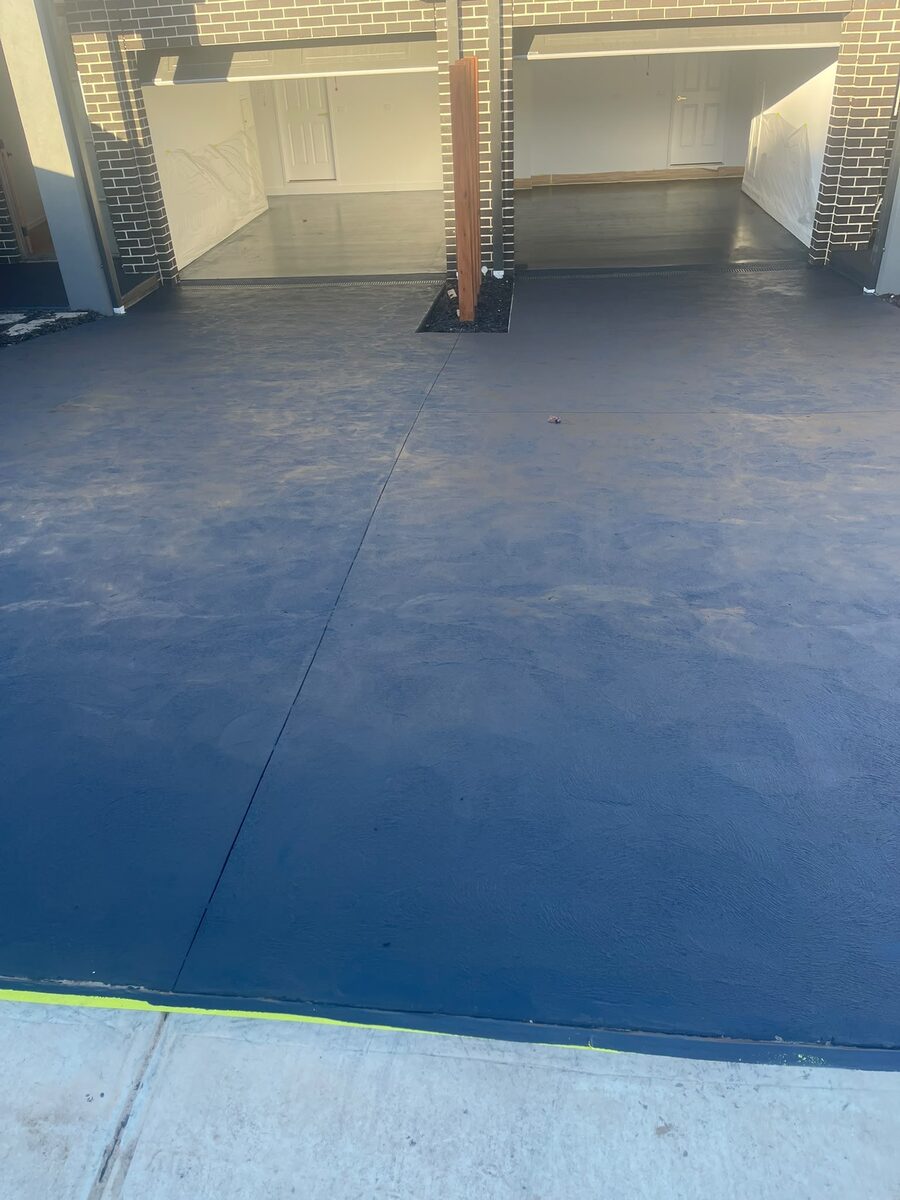
A bare concrete garage floor dusts, stains and looks tired no matter how clean the rest of the house is. An epoxy floor fixes all three in one job, and it is one of the most satisfying upgrades you can do to a garage. Here is what it costs in Melbourne, why the DIY kits usually disappoint, and what a professional job actually involves.
What it costs
Published Melbourne pricing puts professional garage epoxy from around $2,000 for a single garage. A single garage of 18 to 25 square metres commonly runs between about $1,980 and $3,000 depending on the system and the condition of the slab, and a double garage runs higher. Decorative flake finishes, moisture barriers and heavy crack repair sit on top of that.
DIY hardware-store kits cost a few hundred dollars. The gap between the two numbers is almost entirely preparation, and preparation is almost entirely the result.
DIY vs professional: the honest version
DIY epoxy kits promise a weekend transformation. What the box does not tell you is that the coating is only as good as what it sticks to. Bare garage concrete is usually smooth, contaminated with years of oil and tyre residue, and sometimes damp from below. Coating over that without grinding it open is why DIY epoxy peels under hot tyres within a year or two.
A professional job grinds the slab mechanically to give the coating something to grip, repairs cracks and divots, tests for moisture, and applies a system of primer, body coat and topcoat designed to work together. That is the difference between a floor that looks good in week one and a floor that still looks good in year ten.
Hot tyre pickup is the classic failure: tyres heat up on the road, park on the coating, and pull weak epoxy straight off the slab. Properly bonded professional systems are built to resist exactly that.
What a professional epoxy job includes
Assessment. The slab is checked for cracks, previous sealers, oil contamination and moisture. A damp slab needs a moisture-managing primer or the job will fail regardless of product.
Diamond grinding. The surface is ground back to open, clean concrete. This is the step DIY skips, and it is the step that decides whether the floor lasts.
Repairs. Cracks, holes and spalling are filled and ground flush.
Primer and body coat. An epoxy primer bonds to the prepared slab, then the body coat goes down. Decorative flake is broadcast into the wet coat if you want the speckled finish.
Topcoat. A hard-wearing clear topcoat protects the colour and flake, resists chemicals and hot tyres, and makes the floor easy to clean.
How long does it take and last?
Most single garages take two to three days including curing between coats, and the floor usually takes light foot traffic after about 24 hours and vehicles after several days, depending on the system and weather. A professionally installed epoxy floor in a residential garage should give you ten years or more of service with basic care.
Melbourne notes
Cold slabs slow curing, so winter jobs need realistic scheduling, and garages in newer estates across Clyde North, Officer and Cranbourne often have very smooth steel-trowelled slabs that need thorough grinding before anything will stick. Older garages in Dandenong and Noble Park more often need oil-stain treatment and crack repair first.
Epoxy vs the alternatives
Garage floor paint is the cheap option and it looks it within a year or two. Standard floor paint sits on the surface, wears through under tyres and hates oil. It is fine for a storage room, not for a working garage.
Interlocking tiles go down fast with no curing time and handle a damp slab better, but they cost more per square metre than epoxy and dirt works its way into the joints.
Polished concrete is tough and looks sharp, but grinding and polishing a garage slab costs more than epoxy and the finish is colder and harder underfoot.
For most Melbourne garages, a professional epoxy system is the best balance of cost, durability and looks.
Slip resistance and shine
High-gloss epoxy can be slippery when wet. Flake finishes add natural texture, and a slip-resistant additive can go into the topcoat for driveways that run into the garage or workshops where water gets around. You pick the level of shine and grip when you pick the system.
Worth it?
If you use your garage as a workshop, a gym, a showroom for the car or just want it clean and bright, yes. It is one of the few upgrades that changes how a space feels every single day. If the slab is cracking badly or the garage floods, that gets sorted first, and we will tell you straight if epoxy is not the right call for your floor. Call 0426 179 466 or send the quote form to get your garage looked at.